
Guide for officials, teachers, youth and association members
Digital initiatives in propaganda and mass mobilization work; “skilful mass mobilization” model ideas
What “skilful mass mobilization” means in practice; model ideas for schools, commune Fatherland Front committees, the Women's Union, police, the Youth Union and residential areas; digital tools for outreach work and how to record results.
Quick summary
- Skilful mass mobilization means persuading through concrete action that suits each group, so people join in voluntarily.
- A good model starts from something residents need, has a person in charge and shows visible results.
- QR notice boards, short videos, quizzes, digital maps and chatbots get information out faster and make results measurable.
- Digital tools only support; they do not replace meeting and listening to people in person.
What does “skilful mass mobilization” involve?
Put simply, skilful mass mobilization is persuading people through practical, timely action suited to each group, so they understand, agree and join in voluntarily. Being skilful is not about speaking well; it is about listening, starting from what people need and officials setting the example first.
In practice a model can be very small: a lit-up alley, a help point where older people do online procedures, a group of parents keeping order at the school gate. Combined with digital transformation, a model spreads more easily, people get information faster and results are recorded more clearly.
What does a good skilful mobilization model need?
Starts from a real need
Something residents, students or parents want solved, not an activity set up just to have a movement.
Fits each group
Older people need in-person guidance, young people are used to phones, parents need short, timely information.
Officials lead by example
The person in charge works alongside residents, keeps promises and responds quickly to feedback.
Residents discuss and act together
People give input, contribute effort, follow implementation and clearly see the benefits they receive.
Visible results
Cleaner streets, faster procedures, more households taking part; recorded with photos and figures.
Digital transformation initiatives in propaganda and mass mobilization: tools to use
No expensive software is needed. Most of the tools below run on phones, and people open them with a link or QR code:
QR notice boards
Placed at community houses, school gates and neighbourhood boards, leading to new notices, activity schedules and role models; updated without reprinting.
Short videos
One topic per video in a few minutes: how to do a procedure, a role model, a reminder of something to do.
Quizzes and online knowledge contests
Short question sets on the topic to promote, run in rounds by neighbourhood or by association and youth branch.
Digital maps
Mark heritage and revolutionary sites, community-built works and places needing attention for security or the environment.
Q&A chatbots
Answer residents' common questions on procedures, office hours and local activities, based on materials prepared and checked by the unit.
3D exhibitions, audiobooks
Show traditional images and movement results in a virtual room; stories read as audio so older people can listen easily.
Skilful mobilization models in schools
Connecting parents via QR codes
A QR code at the school gate leads to notices, activity schedules and pick-up guidance; parents give feedback through a short form.
Parents help keep the gate safe
A volunteer parent group helps at dismissal time; a digital map shows parking and safe walkways for students.
Students as young communicators
Students make videos and quizzes on safety, the environment and traditions, and take the messages home to their families.
Digital tradition room
A 3D exhibition preserving the school's photos, keepsakes and stories, inviting alumni and parents to contribute materials.
Helping students in difficulty together
Support needs are updated online so parents and alumni can take on the right task; students' personal details are never made public.
Skilful mobilization models for commune and ward Fatherland Front and residential areas
Digital neighbourhood notice board
QR codes on notice boards and at the community house lead to notices, meeting outcomes and publicly disclosed contributions.
Quick resident consultation
Online feedback forms on a project or a neighbourhood agreement; in-person meetings remain for people without phones.
“Good deeds around us” map
Mark community-built works, role models and places that need a helping hand, so mobilization goes where it is needed.
Online public service help team
Volunteers help older people do procedures on their phones; guidance videos via QR code to watch again when needed.
Digital book of contributions
Record and publicly acknowledge contributions of effort and money to shared works, building trust and encouraging others to join.
Skilful mobilization models for the Women's Union
Digital women's branch
An online group with a QR code sharing meeting schedules, parenting tips and family health care.
Digital skills for members
Short sessions with videos on safe payments, spotting online scams and using online public services.
Showcasing members' products
A digital page or stall presenting products made by members, helping them reach more buyers.
Quizzes on family and gender equality
Run in rounds at branch level, combined with in-person meetings for discussion.
Discreet sharing channel
A QR code to a form where women can share difficulties and be contacted by union officials, keeping the sharer's details confidential.
Skilful mobilization models for commune and ward police
QR procedure guides
Placed at the station and in residential areas, leading to videos and step-by-step guides for common procedures.
Short scam-warning videos
A video series on phone and social media scams, how to spot them and where to report them.
Neighbourhood security map
Mark self-management points and contact numbers of local forces so residents can find them when needed.
QR channel for reports
Residents report security and order issues with photos and receive feedback on how they were handled.
Safety quizzes for students
Work with schools on quizzes about road safety, fire prevention and online safety.
Skilful mobilization models for the Youth Union
Digital transformation support teams
Youth members help residents install apps, do procedures and spot fake news, at the community house or at home.
Digitising revolutionary sites
Youth members take photos, write narration and build 360° tours or digital maps of local heritage and traditional sites.
Short communication campaigns
A series of videos, quizzes and challenges on one specific topic over a set period, with participation measured.
Youth projects with QR codes
Each project or task has a QR code telling how it was done, who took part and what it achieved.
Listening to young people
Online surveys of young people's views on study, jobs and desired activities, to choose work that meets real needs.
How to run the model and record results
Start small, trial it
Pick one neighbourhood, class or branch to trial for a few weeks before expanding.
Assign clear responsibilities
Who updates the notice board, who answers questions, who compiles figures; with a concrete schedule.
Keep in-person channels alongside
People without phones still get information through group meetings, loudspeakers and leaflets; digital tools are an addition.
Record before-and-after figures
Households taking part, views, QR scans, issues resolved, processing time.
Keep photos and residents' feedback
Activity photos and comments from residents, students and parents are weighty evidence.
Review to scale up
Write down the method, difficulties and effort needed so other places can learn from it and adapt it.
Frequently asked questions
What does “skilful mass mobilization” mean?
It is persuading people through practical action suited to each group, starting from real needs, so they understand, agree and take part voluntarily.
Which skilful mobilization model should I choose in 2026?
Choose one concrete thing local residents need, such as help with online procedures, a safe school gate or clearing litter spots, then add a digital tool so information spreads fast and results can be measured.
Do digital initiatives in mass mobilization work need complex technology?
No. QR notice boards, short videos, online quizzes or a simple digital map are enough, as long as they are actually used and someone keeps them updated.
What about older people who do not use smartphones?
Keep in-person channels such as group meetings, loudspeakers and leaflets, and ask youth members or relatives to help. Audiobooks and videos with large text also make access easier for older people.
How can I show that a skilful mobilization model works?
Compare before-and-after figures such as households taking part, issues resolved, views and QR scans, along with photos and residents' feedback.
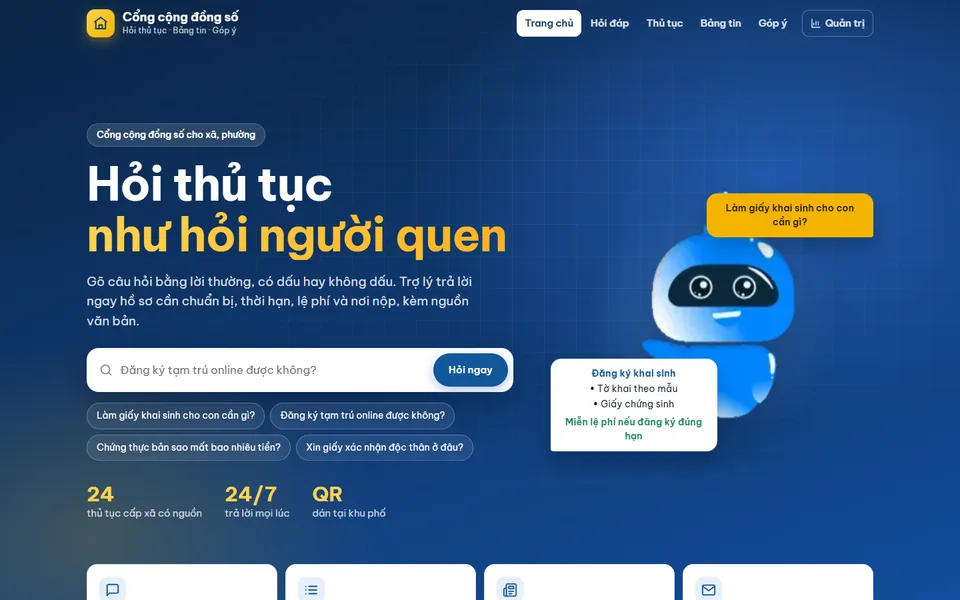 Digital government
Sample product
Digital community portal with a procedure assistant
Try a similar digital product live on a computer or phone. Real products are built around your own idea.
View demo (opens in a new tab)Need digital tools for your skilful mobilization model?
We suggest ideas and work with you to build digital products: QR notice boards, videos, quizzes, digital maps, Q&A chatbots and 3D exhibitions, usually within 3–10 days.
Related articles
See all articlesModels for following Uncle Ho
More than 15 model name ideas for schools, neighborhoods, agencies and youth unions; how to choose, name, run and record results, and ways to use digital technology to make models lively and widely shared.
ReadHeritage digitization, red addresses
What heritage digitization is, its forms and why it matters for education and tourism; how to build a digital map of red addresses, 360° virtual tours, QR codes and audio guides step by step, and how to use digital heritage in lessons and Youth Union and Pioneer activities.
ReadMaking a digital entry
What a digitised contest entry means, which format suits STEM, AI, culture or initiative contests; how to prepare content, make the product work well on phones, submit it by link and QR code and present it to the judges.
Read