
Guide for party cells, schools, neighborhoods and agencies
Models for learning from and following Uncle Ho in 2026: name ideas and how to run them
More than 15 model name ideas for schools, neighborhoods, agencies and youth unions; how to choose, name, run and record results, and ways to use digital technology to make models lively and widely shared.
Quick summary
- A good model is a concrete activity with a person in charge, a product and visible results.
- Keep the name short and say the action and result.
- Each type of unit has its own approach: schools, neighborhoods, agencies and youth unions.
- Digital tools such as QR codes, audiobooks and games keep models regular and easy to share.
What is a model for learning from and following Uncle Ho?
It is a concrete, regular way for an individual or group to follow Ho Chi Minh's thought, ethics and style in work, study and daily life, with measurable results.
In 2026 the Politburo issued Directive 07-CT/TW on stepping up learning and practising Ho Chi Minh's thought, ethics, methods and style in the new period. Many units are taking the chance to refresh their models with a focus on real results.
How to choose a model
A model that is easy to run usually answers four questions:
Who does it?
An individual, party cell, teaching group or youth cell, with a clear person in charge.
Which teaching does it follow?
Tied to a specific teaching or standard: diligence, thrift, integrity; closeness to the people; devotion to students…
For whom, solving what?
The beneficiaries and a real problem in the unit or area.
What is the result?
Something countable: sessions, participants, issues resolved, satisfaction.
Naming the model
Keep the name short and memorable, saying the action and result. “A Ho Chi Minh story every week” is clearer than a generic name like “Learning from Uncle Ho at school”.
A simple formula: action + audience + rhythm, such as “One good deed a month”, “Friendly one-stop desk”, “Neighborhood notice board with QR codes”.
Model ideas for schools
A Ho Chi Minh story every week
Teachers and students tell stories, recorded as audiobooks with QR codes to replay at home.
Knowledge contest about Ho Chi Minh by grade
A review game on a projector or phones during class meetings.
Class reading corner
A small bookshelf with QR codes to materials; students write reflections after each book.
One good deed a month
Record students' good deeds and feature role models on the school's section.
Teachers share digital resources
Each teacher shares digital resources every term with the teaching group.
The school's digital heritage room
School history and role models on a page viewable on phones.
Model ideas for neighborhoods and residential party cells
Neighborhood notice board with QR codes
Notices, common procedures and local role models updated weekly.
Words matched by deeds
A channel for residents' feedback with published results.
Digital helpers for older residents
Help with online public services and safe payments.
The ward's revolutionary sites
A digital map and QR codes at historic sites for residents and students.
Local good-deed stories
A monthly section of real stories from the neighborhood.
Model ideas for agencies and youth unions
Friendly one-stop desk
Clear procedure guidance, a Q&A assistant and satisfaction surveys by QR code.
One action per official
Each person chooses one concrete action and shares results quarterly.
Party cell meetings with digital materials
Ten minutes of short video and questions on Ho Chi Minh's teachings.
Youth tell Ho Chi Minh stories on video
One short video per youth cell per quarter on the union's channel.
Youth project digitizing revolutionary sites
Members photograph, write captions and map local historic sites.
Running the model and recording results
Make a short plan
What, who, when, the product and how results are measured.
Keep it regular
Tie it to existing meeting schedules so it is not abandoned.
Record with figures and pictures
Sessions, participants, photos, videos and beneficiaries' feedback.
Share and scale
Present the approach so other units can learn and apply it.
Using digital technology for the model
Not every model needs technology, but a little digital help keeps it regular, easy to record and widely shared:
QR codes
Link to stories, materials and notices; place them at the corner, notice board or workplace.
Audiobooks
Stories about Ho Chi Minh recorded as audio for phones.
Games and quizzes
Review knowledge about Ho Chi Minh in class meetings and themed sessions.
Digital section or exhibition
A place for activities, role models and view statistics of the model.
Frequently asked questions
What is Directive 07-CT/TW of 2026?
A Politburo directive issued on 13 July 2026 on stepping up learning and practising Ho Chi Minh's thought, ethics, methods and style in the new development period, replacing Directive 05-CT/TW.
Are models individual or collective?
Both are common: individuals choose a concrete action, while groups such as party cells, teaching groups and youth cells build shared models.
Does a model need digital technology?
No. Use it when it keeps the model regular, makes results easier to record and helps reach more people.
Where should materials about Ho Chi Minh come from?
Preferably official sources such as the National Political Publishing House Su That and the Ho Chi Minh Museum, cited when used.
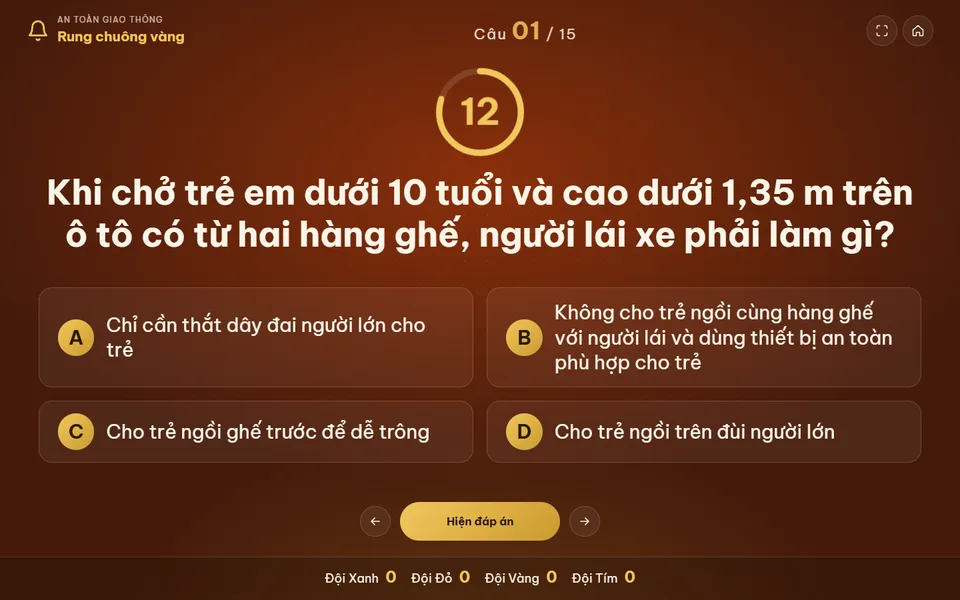 Learning games
Sample product
Learning game set: quiz, Golden Bell, crossword
Try a similar digital product live on a computer or phone. Real products are built around your own idea.
View demo (opens in a new tab)Need digital tools for your unit's model?
Review games about Ho Chi Minh, audiobooks with QR codes, a role-model section and digital exhibitions. You update the content yourself.
Related articles
See all articlesHo Chi Minh Cultural Space
Which items make up a Ho Chi Minh Cultural Space, the steps to build one in schools, kindergartens, neighborhoods and agencies, how to take it online with QR codes, online bookshelves and 3D exhibitions, and how to present it convincingly.
ReadSkilful mobilization, digital outreach
What “skilful mass mobilization” means in practice; model ideas for schools, commune Fatherland Front committees, the Women's Union, police, the Youth Union and residential areas; digital tools for outreach work and how to record results.
ReadDigital youth projects
Ideas for digital transformation youth projects for schools, communes, wards and youth cells, and Pioneer projects for school-wide and class Pioneer units; how to choose an idea, steps from registration to handover, mobilizing resources and keeping the project alive after launch.
Read