
Guide for Party committees, local authorities, the Fatherland Front, Youth Unions, associations, schools and agencies
How to run an online knowledge contest: rules, questions, platform and prizes
A start-to-finish guide to running an online knowledge contest: preparation steps, what the rules usually contain, breaking ties, writing questions, choosing a platform, collecting participant data lawfully, certificates and announcing results.
Quick summary
- An online knowledge contest lets a unit promote a topic to thousands of people at low cost; participants only need a phone.
- The rules must state who may enter, each round's dates, the number of questions, time per attempt, attempts allowed and how ties are broken.
- Questions should come from official sources, include explanations, and be drawn from a bank large enough for every attempt to differ.
- Since 1 January 2026 the Personal Data Protection Law is in force: ask only for necessary information and obtain clear consent.
What an online knowledge contest is and when to run one
In an online knowledge contest, participants answer multiple-choice questions on a topic on a website or phone over a set period; the organizers then compile results and award prizes. Topics often relate to anniversaries, the history of the local Party organization, law, digital transformation, road safety, culture and heritage.
Compared with written contests, online contests reach more people, are scored automatically and give participation figures per unit for reporting. They suit Party committees, commune and ward authorities, the Fatherland Front, Youth Unions, associations, schools and agencies that want to reach many people within a few weeks.
Steps to run an online contest
1. Set goals and audience
What the contest is for and who it is for: officials, Party members, Youth Union members, students or all residents; within one school, one commune or a whole province.
2. Plan and form an organizing committee
An organizing committee, a question-writing team, a technical team and a secretariat; budget, prizes and milestones.
3. Write and review questions
Build a question bank from official materials, with answers and explanations, reviewed by experts.
4. Issue the rules
Write concise, complete rules, especially tie-breaking and prohibited behavior.
5. Prepare and test the platform
Build the contest site and let a group test it to check questions, timing, scoring and phone display.
6. Launch and promote
A launch event, QR codes at offices, schools and community halls; posts on the unit's news page, Zalo and Facebook.
7. Monitor weekly
Track participants per unit, remind units with low turnout and handle technical feedback.
8. Close and award prizes
Finalize results, verify winners, announce, award prizes and report the figures.
What online contest rules usually contain
Reading the rules of ministry- and province-level online contests in 2025–2026 shows a fairly common structure:
Eligibility
Who may enter and who may not (usually organizing committee and question-writing team members); any age limits.
Dates and rounds
The contest runs in weekly rounds or stages, each with its own prizes; opening and closing times are stated for each round.
Questions and time per attempt
For example about 20 multiple-choice questions in 20 minutes, sometimes with an extra question predicting how many will answer correctly.
Number of attempts
A limit per day or per week, keeping the best result; some contests allow unlimited attempts to encourage review.
Ranking
The usual order: more correct answers, then a closer prediction, then a shorter completion time, then an earlier submission.
Team prizes
For the unit with the most participants, or the highest participation relative to its population or membership.
Side prizes
Oldest and youngest participants, people with disabilities, ethnic minorities, Vietnamese living abroad, depending on the topic.
Prohibited behavior
Using another person's details, entering on someone's behalf, using automated software or AI tools; organizers may void results.
Technical issues and verification
How network or system faults are handled; winners must present documents for verification.
Writing questions: accurate, explained, plentiful
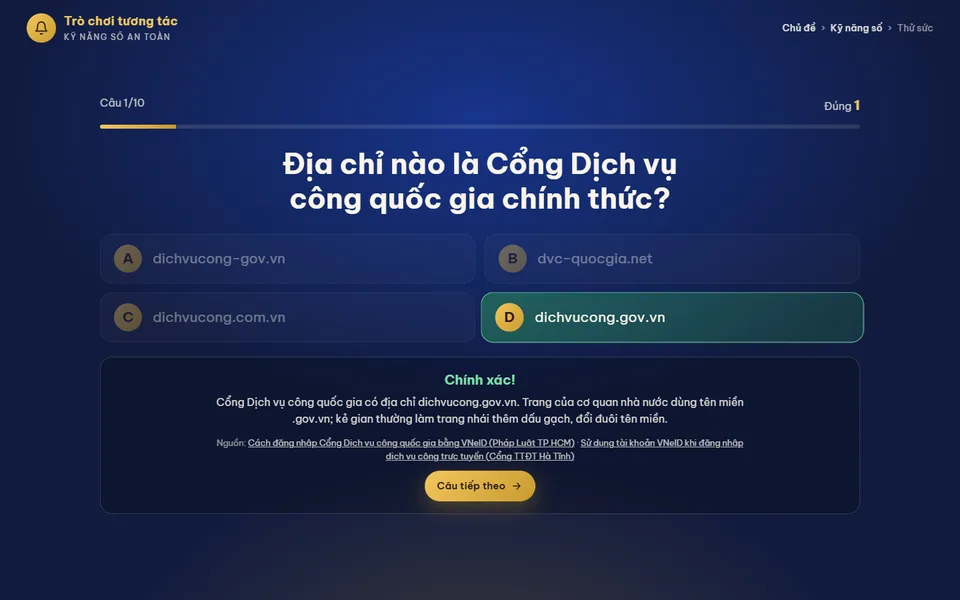
Questions give the contest its educational value. Each should come with a short explanation and source, so participants learn something even when they answer wrongly.
Official sources
Draw on official documents, local Party history books, legal texts and official news sites; cite a source for each question.
A large question bank
Write several times more questions than each test needs so every attempt is drawn at random with shuffled options; this limits answer lists shared online.
Moderate difficulty
Mix easy, medium and hard questions; avoid trick questions and questions with two correct answers.
Review before launch
Experts check every question, answer and explanation; fix disputed questions before the launch.
Choosing an online contest platform
Many contests use the organizer's own portal or a dedicated domain for each contest. Whatever the solution, the platform should offer:
Easy on phones
Opened from a QR code or link, large type, few steps, no app to install.
Handles peak days
Participants tend to crowd in on the first and last days of each round; run a load test before opening.
Rankings by unit
Participation by Party cell, Youth Union branch, neighborhood or school, to motivate units and award team prizes.
Basic anti-cheating
Attempt limits, duplicate account checks and completion times recorded to the second.
Result export
Export ranked lists with weekly figures for committee meetings and reports.
Participant information and personal data
The Personal Data Protection Law took effect on 1 January 2026. For online contests this means:
Ask only what is needed
Full name, unit and phone number are usually enough to take part and be contacted. Identity numbers should only be requested to verify winners.
Obtain clear consent
State what the information is used for and how long it is kept; participants actively tick to consent, and silence does not count as consent.
Take care with students
Publishing the names and photos of student winners requires consent from their parents and from the children themselves from age 7.
Publish only what is needed
Winner lists need only names and units; never publish phone or identity numbers.
Certificates, verification and announcing results
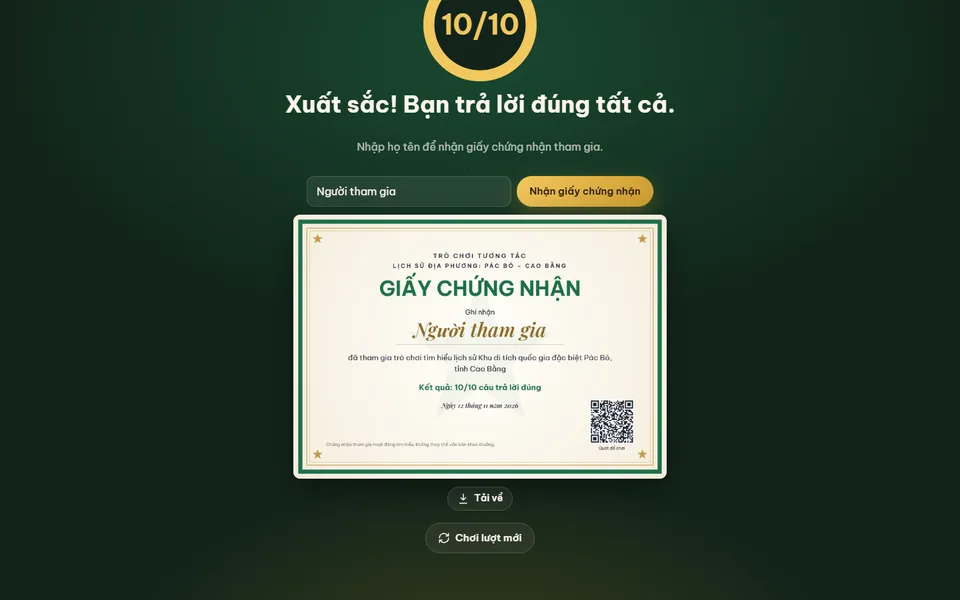
A participation certificate issued right after the attempt lets participants share it and spread the contest. Prizes need a stricter process:
Automatic certificates
Participants enter their name and receive a certificate with the contest name, result and date, to download or share at once.
Verifying winners
Contact winners and check identity documents against their registration before the official announcement.
Public announcement
Post each round's results on the contest page and the unit's news page, with participation figures.
Avoiding too many ties
In large contests, the share of perfect scores is often very high. For example, a 2026 provincial online contest in Ninh Binh drew over 219,000 people and more than 355,000 attempts, about 38% of which scored full marks. The prediction question and completion time then decide the ranking. The rules must therefore state the tie-breaking order clearly, and the platform must record time precisely.
Include a prediction question
Predicting how many people answer every question correctly is a common tie-breaker; state when the figure is fixed for comparison.
Test with real people
Let officials and teachers try the contest a few days before opening to catch wrong or unclear questions and display errors.
Announce weekly
Weekly results keep attention throughout the contest rather than only on the first day.
Frequently asked questions
What should online knowledge contest rules include?
Eligibility, dates and rounds, the number of questions and time per attempt, attempts allowed, prizes, tie-breaking, prohibited behavior, handling of technical issues, and how winners are verified and announced.
How are ties broken?
The usual order is: more correct answers, a closer prediction of how many answer correctly, a shorter completion time, an earlier submission. This order must be stated in the rules.
Should participants be asked for their ID card number?
Only when truly necessary, for example to verify winners of a large contest. For school or commune contests, name, unit and phone number are usually enough. Whatever you ask, state the purpose and let participants actively consent.
How long does it take to organize an online contest?
Usually a few weeks of preparation: writing and reviewing questions, issuing rules, building and testing the platform; the contest itself runs from one to several weeks depending on the number of rounds.
How can answer lists shared online be limited?
Use a large question bank with random draws and shuffled options per attempt; limit attempts; include a prediction question and rank by completion time; ban automated tools in the rules.
Related demos
 Games
Sample product
Interactive games
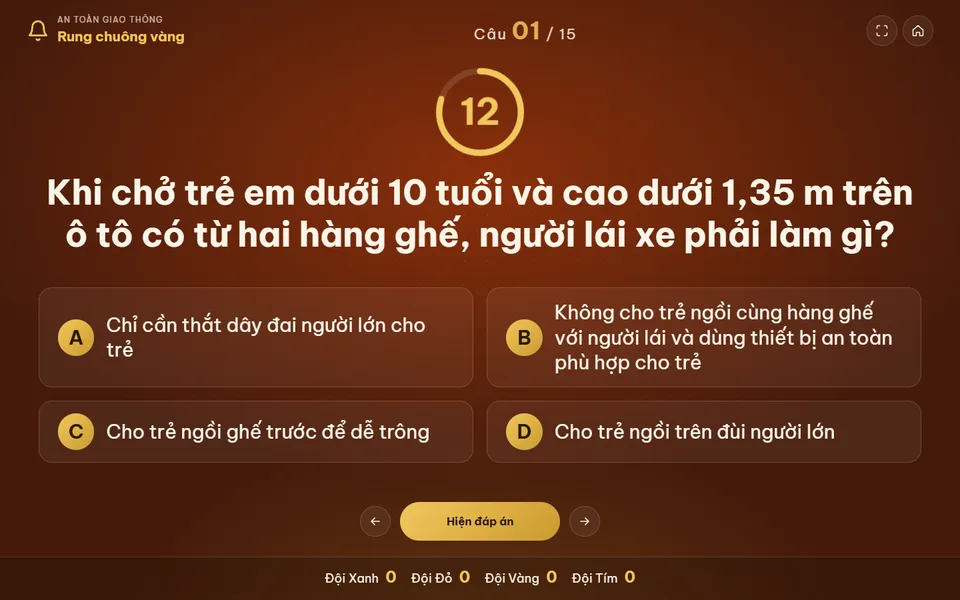
Three games on one platform: a quiz with explanations and certificates, Golden Bell with a countdown and team scores, and a crossword.
Try it live on a computer or phone. Real products are built around your own idea.
View demo (opens in a new tab) Portal
Ho Chi Minh Cultural Space website
His life journey, places he passed through, thought, ethics and style, the unit’s own practice, a library, games and news; the unit updates content itself, works well on phones.
View demo (opens in a new tab)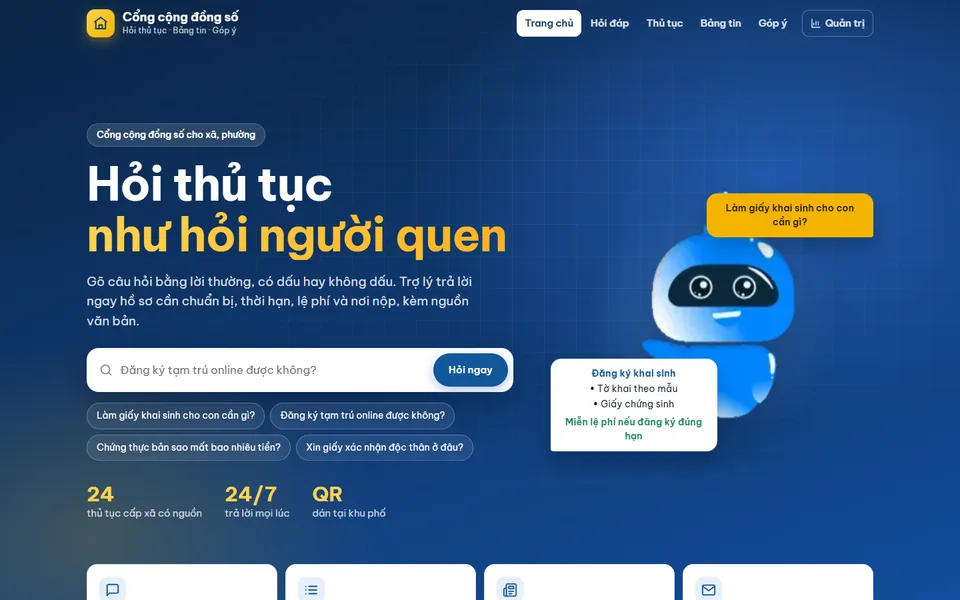 Digital government
Digital community portal and procedure assistant
An assistant answering 24 commune-level procedures with sources, QR notice boards, tracked feedback and an admin page for officials.
View demo (opens in a new tab)
Need a platform for an online knowledge contest?
We suggest ideas and work with you to build a themed contest site: explained, sourced questions, rankings by unit, automatic certificates, QR launch codes and result export. Usually within 3–10 days once the question bank is ready.
Related articles
See all articlesModels for following Uncle Ho
More than 15 model name ideas for schools, neighborhoods, agencies and youth unions; how to choose, name, run and record results, and ways to use digital technology to make models lively and widely shared.
ReadSkilful mobilization, digital outreach
What “skilful mass mobilization” means in practice; model ideas for schools, commune Fatherland Front committees, the Women's Union, police, the Youth Union and residential areas; digital tools for outreach work and how to record results.
ReadThemed initiative ideas
Digital product ideas for themed initiative contests: preventing school violence, road safety, drug prevention, environmental protection and youth communication; how to choose a problem, show impact and develop your own idea.
Read